How Local Vegetables Meet French Sauces at Duong Restaurant
At Duong Restaurant Saigon, the meeting of Vietnamese ingredients and French technique begins with respect for freshness. Local vegetables bring fragrance, texture, and a sense of place, while carefully prepared sauces add depth without hiding their character. The result is a style of fine dining that feels connected to Saigon rather than separated from it.
A morning market offers far more than garnish. Water spinach, banana blossom, herbs, mushrooms, lotus root, eggplant, and seasonal greens each respond differently to heat, acidity, butter, and stock. The chef’s role is to identify what makes each ingredient distinctive, then select a French-inspired sauce that supports that quality.
A closer look at Duong Restaurant Saigon’s chef and the craft of pairing local vegetables with French sauces reveals a thoughtful culinary conversation. Vietnamese produce supplies brightness and contrast; French methods contribute structure, silkiness, and a polished finish.
From Saigon markets to the plate
Local vegetables often have assertive flavors. Vietnamese herbs can be intensely aromatic, banana blossom has a gentle bitterness, and morning glory offers a crisp stem with tender leaves. These qualities call for sauces that are precise rather than heavy. A light reduction, a tart vinaigrette, or a delicate emulsion can create balance while allowing the ingredient to remain recognizable.
This approach reflects the restaurant’s broader identity as a Vietnamese and French fusion destination. The Duong’s chef-led story describes a kitchen shaped by local inspiration, careful preparation, and an interest in presenting familiar flavors in an elegant setting. The goal is not to turn Vietnamese vegetables into French ingredients, but to give them another expressive language.
Why French sauces suit Vietnamese produce
French sauce-making offers a useful framework for vegetables with strong individual personalities. A beurre blanc can soften the sharpness of herbs with its buttery acidity, while a velouté can give mushrooms or cauliflower a smooth, savory foundation. A reduced jus brings intensity to roasted vegetables, and a mustard vinaigrette can sharpen sweet roots or lightly grilled greens.
Vietnamese cooking adds its own sense of balance. Lime, fish sauce, rice vinegar, ginger, lemongrass, pepper, and fresh herbs can be incorporated carefully into a French technique. A classic sauce may therefore receive a local accent: citrus for lift, herbs for fragrance, or a small savory note that recalls the flavors of a Saigon market.
Designing contrast, not competition
The strongest pairings consider texture as carefully as flavor. A silky mushroom sauce needs something with bite, such as blanched greens or roasted lotus root. Tender vegetables benefit from toasted seeds, crisp shallots, or lightly fried herbs. The contrast keeps each mouthful lively and prevents a sauce from becoming monotonous.
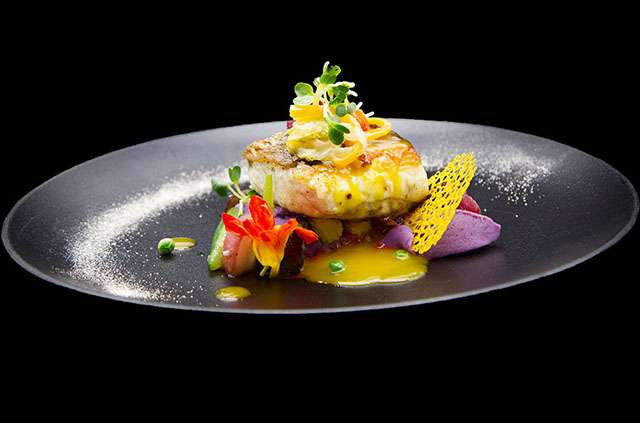
Color also matters in fine dining. Deep green leaves, golden roasted vegetables, pale cream sauces, and bright herb oils create a plate that feels abundant without appearing crowded. This visual restraint allows the food to look refined while retaining the generous spirit associated with Vietnamese meals.
| Local ingredient |
French-inspired treatment |
Desired effect |
| Morning glory |
Light butter sauce with citrus and herbs |
Brightness with a soft finish |
| Banana blossom |
Mustard vinaigrette or gentle shallot dressing |
Balance for its subtle bitterness |
| Seasonal mushrooms |
Velouté or reduced jus |
Savory depth and silkiness |
| Lotus root |
Roasted with herb-infused sauce |
Contrast between crispness and richness |
| Eggplant |
Charred with a light reduction |
Smoky flavor with added structure |
| Fresh greens |
Delicate cream or beurre blanc |
Gentle richness without heaviness |
Pairings that express Vietnamese character
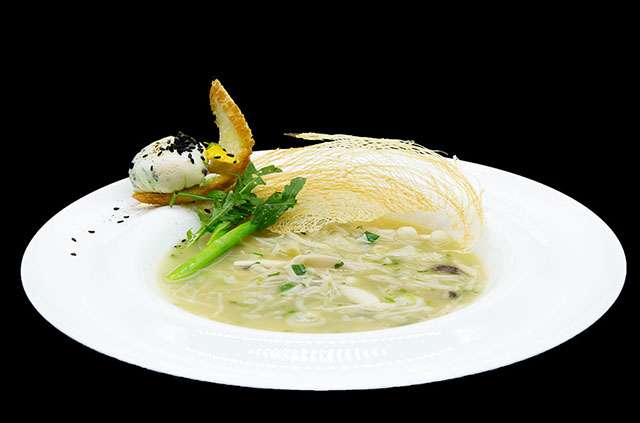
Mushrooms are especially well suited to French technique because they absorb flavor while contributing their own earthy aroma. A carefully reduced sauce can intensify that savoriness, but fresh herbs or a touch of acidity keeps the dish from feeling dense. This kind of preparation fits naturally beside seafood, poultry, or a vegetable-forward course.
Eggplant offers another compelling possibility. Its smoky, creamy interior can support a glossy jus, while a sharper dressing cuts through the richness. Paired with herbs, pepper, or a small amount of fermented seasoning, the result can feel both familiar and contemporary.
For salads, the principle changes. Raw or lightly blanched vegetables need a dressing that highlights freshness. A French vinaigrette made with quality oil, vinegar, and mustard can be adjusted with lime, Vietnamese herbs, or a subtle savory element. The sauce should cling lightly, leaving the vegetables crisp and aromatic.
Technique behind the elegance
Sauces begin with foundations. Stocks, reductions, clarified butter, and emulsions demand patience because small errors in temperature or seasoning can overwhelm delicate produce. The chef must decide whether a vegetable should be blanched, grilled, roasted, or served nearly raw before the sauce is even considered.
Timing is just as important. A beurre blanc is best served while its texture is smooth, a reduction must reach the right concentration, and leafy vegetables can lose their freshness within moments of overcooking. In a restaurant setting, this precision helps preserve the clean flavors expected from a fine-dining experience.
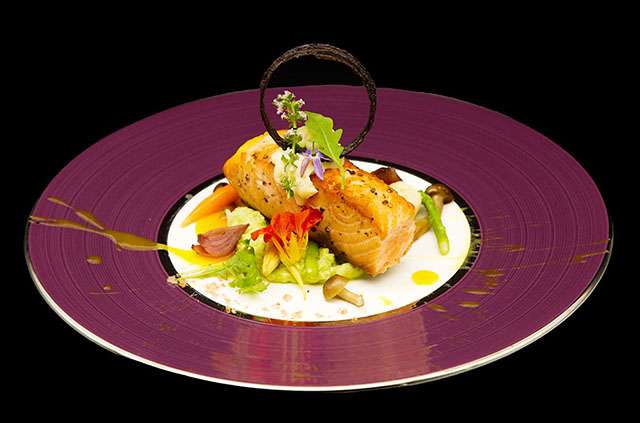
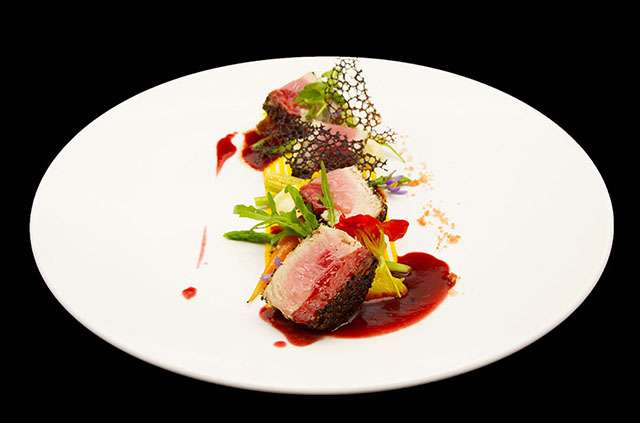
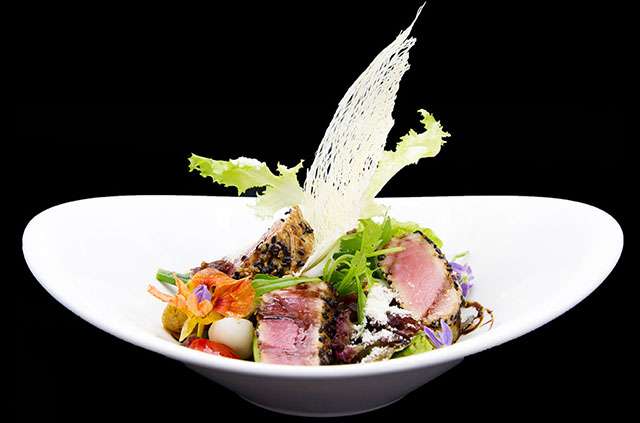
The same attention can be seen in dishes such as seafood, tuna steak, salads, and mushroom soup, where a supporting element should clarify the main ingredient rather than compete with it. The best sauce is sometimes the one guests notice only after realizing how complete the dish tastes.
How to appreciate the pairing
When tasting a vegetable dish, begin with the ingredient itself. Notice its aroma, firmness, sweetness, bitterness, or smokiness before focusing on the sauce. Then taste the two together and look for the point where the sauce changes the vegetable without erasing it.
A few details can make the experience more rewarding:
- Look for a clear contrast between richness and acidity.
- Notice whether herbs are used as fragrance, seasoning, or texture.
- Pay attention to the vegetable’s cooking point and remaining bite.
- Taste the sauce with seafood or meat, then separately with the vegetable.
- Consider how local ingredients give a French technique its Saigon identity.
A dining experience rooted in place
Food at Duong Restaurant Saigon can be understood as part of a wider cultural setting. Local ingredients connect the menu to Vietnam’s seasons and markets, while French methods reflect Ho Chi Minh City’s layered culinary history. The combination feels most convincing when technique remains in service of place.
That connection also appears in the restaurant’s seasonal storytelling. Its festival food guide shows how Vietnamese celebrations can inspire dishes that carry memory, symbolism, and regional flavor. A sauce may be French in method, but the ingredients and occasion give the plate its local meaning.
Guests often notice this balance through the full meal rather than a single bite: the warmth of the dining room, the composed presentation, and the movement between seafood, vegetables, soups, and refined sauces. Independent traveler reviews offer another perspective on how visitors experience the restaurant’s food and service in District 1.
Reserve a table on Dong Du Street to explore how Vietnamese vegetables, French sauce-making, and chef-led hospitality come together in a refined Saigon dining experience. Allow time to enjoy the progression of flavors, and let each seasonal ingredient show why local produce deserves the center of the plate.