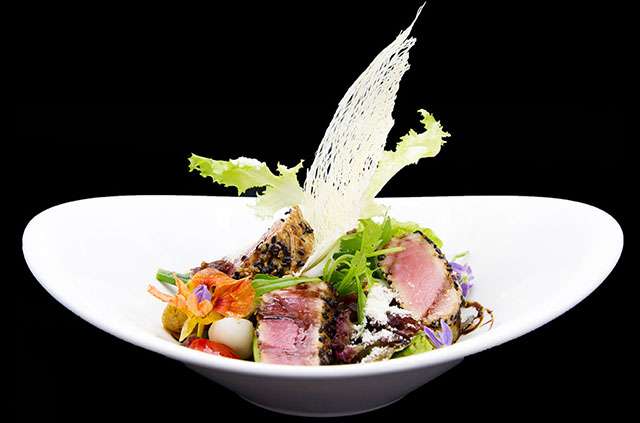
The Geometry Of Duong Restaurant Saigon’s Spring Roll Platter
A spring roll platter can look casual at first glance: crisp wrappers, fresh herbs, dipping bowls and neatly arranged fillings. At Duong Restaurant Saigon, the visual appeal begins with that familiar Vietnamese abundance, then moves towards the precision expected from a fine-dining room on Dong Du Street.
Its geometry is practical as well as decorative. Lines, circles, colour blocks and repeated shapes guide the eye across the plate, while contrasts in temperature, texture and flavour create a balanced tasting sequence. Each roll becomes part of a larger composition rather than a separate snack.
For Australian diners used to sharing plates in Melbourne, Sydney or Brisbane, this format feels immediately sociable. Yet the platter also rewards closer attention, much like a carefully designed degustation course: pick up one piece, add a measured amount of sauce, and notice how the whole arrangement changes with every bite.
A Platter Built Around Balance
The central shape is usually created by repetition. Rolls may be placed in parallel rows, angled towards a shared dipping bowl or arranged in a loose fan. This gives the platter movement without making it feel crowded. The eye naturally follows the edges of the wrappers before landing on the brighter colours of lettuce, herbs, carrot or cucumber.
That order matters because Vietnamese food often depends on equilibrium. A fried roll needs freshness; a soft rice-paper roll benefits from aromatic herbs; a rich filling needs acidity, salt and gentle heat. The platter’s layout makes those relationships visible before the first taste.
Duong’s approach fits the restaurant’s broader culinary identity, where familiar Vietnamese flavours are refined through controlled technique. The discussion of Vietnamese street food explains how street-inspired dishes can gain a more polished structure without losing their cultural character.
From Crisp Edges To Soft Folds
Texture is one of the platter’s strongest design tools. A fried spring roll offers a firm, audible shell, while a fresh rice-paper roll has a translucent surface and a yielding bite. These opposing textures create a visual rhythm: golden and opaque beside pale and glossy, angular beside supple.
The contrast also changes how diners eat. A crisp roll may stand alone with a concentrated dipping sauce, while a fresh roll invites a combination of herbs, lettuce and sauce. The platter therefore behaves like a small map of techniques, showing how the same broad idea can produce very different experiences.
For Australian diners, the comparison may be familiar from modern shared menus where tempura, raw seafood and pickled vegetables sit together. The difference is that Vietnamese spring rolls place herbs, fermented notes and dipping sauces at the centre of the experience, rather than treating them as optional garnish.
Colour, Space And The Shared Table
Negative space is as important as the rolls themselves. A clean rim, separated sauce bowls and carefully spaced portions prevent the dish from appearing heavy. Green herbs add vertical height, while orange, red and pale fillings create a colour sequence that makes the platter feel generous without being chaotic.
This is especially effective in a cosy restaurant setting, where a shared plate becomes part of the table’s social architecture. Diners can reach towards the centre, choose different shapes and compare textures. It suits the Australian habit of ordering several dishes for the table, particularly when friends are accustomed to splitting the bill through a payment app after dinner.
| Element |
Visual role |
Taste or texture effect |
Best dining approach |
| Fried wrapper |
Golden lines and crisp edges |
Crunch and warmth |
Eat soon after serving |
| Rice paper |
Translucent folds |
Soft, fresh texture |
Pair with herbs and sauce |
| Fresh herbs |
Green height and contrast |
Fragrance and lift |
Add a small amount at a time |
| Dipping sauce |
Circular focal point |
Sweet, sour, salty or spicy balance |
Dip lightly before each bite |
| Pickled vegetables |
Bright colour accents |
Acidity and crunch |
Use to refresh the palate |
The geometry also communicates portioning. Instead of placing every component in a single pile, the arrangement creates natural pauses between bites. That makes the platter suitable for a leisurely dinner, rather than the rushed pace of takeaway eaten between trains in Melbourne or a busy workday in Sydney.
Technique Behind The Arrangement
Fine presentation only works when the kitchen controls the details beneath it. Wrapper moisture, filling density and frying temperature all influence the final shape. A roll that is too tightly packed can split; one that is too loose may lose its clean profile. Fresh rolls require equal care because wet ingredients can soften the rice paper and blur its structure.
The French influence at Duong is most visible in this discipline: clean cuts, intentional spacing and attention to sauce placement. It does not need to turn the dish into European food. Instead, it sharpens the Vietnamese foundation, allowing familiar ingredients to appear more composed and deliberate.
Food safety is also part of the unseen geometry. Australian visitors may recognise the principles behind Food Standards Australia New Zealand guidance, especially around temperature control and cross-contamination. In a warm Ho Chi Minh City climate, careful handling is essential when a platter combines fresh herbs, seafood, cooked fillings and dipping sauces.
A Better Way To Taste The Composition
The platter is best approached progressively. Start with a plain bite to understand the wrapper and filling, then add herbs, vegetables and sauce in small increments. This reveals whether the dish is driven by crunch, fragrance, acidity, richness or heat.
Australian diners should also consider the rhythm of the meal. Vietnamese dining often allows several flavours to remain in play at once, while local Australian restaurant culture may encourage a more linear course-by-course progression. Spring rolls sit comfortably between those habits: they can begin a meal, accompany drinks under responsible service rules, or serve as a shared centrepiece before seafood and other chef-led dishes arrive.
- Begin with the least heavily sauced roll.
- Compare fried and fresh textures before adding extra garnish.
- Use herbs to lift rich or savoury fillings.
- Taste the dipping sauce on its own before committing to a full dip.
- Share one of each style before choosing a favourite.
- Allow a little space between bites to notice the changing aftertaste.
A final detail is provenance. When seafood appears in a broader Vietnamese-inspired menu, responsible sourcing adds another layer to the dining experience. Duong’s guide to sustainable tuna sourcing shows how ingredient choices can support both quality and environmental awareness, a concern shared by many Australian diners who look for credible sustainability practices.
Book a table at Duong Restaurant Saigon and examine the platter before reaching for the first roll. Its shapes, colours and textures offer a compact introduction to the restaurant’s Vietnamese-French point of view—one that is best understood bite by bite, across a shared table in the heart of District 1.